Friday, 13 February 2015

The Day I wept for my Country

(source: Twitter)

Last night my heart wept.

We all knew it was coming. We were warned about it weeks ago. Newspapers reported on it. Radio anchors talked about it. Political analysts also came into the fray, and they all braced us. Unless a miracle happened, it was going to go down!!

Oh and our elected public representatives also told us it was going to happen. They were all determined that it would happen. Both sides publicly boasted about how prepared they were for each other. Weapons, on both sides, and in whatever form, were sharpened.

And it was all going to happen in the most sacred place of our democratic nation – the parliament chambers of the Republic. We were warned.

But nothing could have prepared me for this. Never did I think it would have such a huge impact on me like it did.

Like most South Africans, I dreaded this horrible day, but I wanted to see it for myself. I wanted to witness what had become of the nation I, and many others, naively thought we were. Yes. We thought we were the mighty South Africa. South Africa, the sovereign and African powerhouse who has for some time fashioned herself as a beacon of hope for Africa. The paragon of democracy in Africa.

So I took out my tablet and smartphone and searched for an internet signal. But YouTube wasn't working. I started growing anxious. I then went to the news networks I thought would carry live streaming to this dreaded event. The first two disappointed me. Finally, I found one news network whose link was working. I let out a huge sigh of relief.

I sat in my living quarters where I work, in a foreign country,  4000 kilometers away from Cape Town, and I was conflicted between whether I wanted to be home, sitting with loved ones to witness this thing that we have been agonizing over for weeks, or whether it was better that I was far away from the bloodbath that would be. I still don’t know which one was better.

I caught the broadcast just as the deputy president and his wife were greeting a line-up of some important people whose faces I could not make out because of the blurry picture - the signal was too poor.

Finally, there emerged the huge white vehicle ferrying the president and one of his wives. The link got cut-off. Again. My heart sank.

I quickly walked outside with both my cell phone and tablet in hand, hoping that the signal outside would be better. At this stage I was using both devices to see which one would give me a better “seat”, to watch the mayhem that was about to unfold.

Someone, a fellow South African with whom I work in the DRC, walked past me as I was standing in the dark trying to reconnect the link. “Apparently there’s drama in parliament” he said excitedly, trying to strike a conversation, I think. I responded with a cool “ja”, and with that, we ended our exchange. I wasn't there. My heart was home, in Cape Town, in South Africa.

The internet link was not getting any better. But there he appears, I see him, the president, walking toward the podium where he will stand solemnly as our national anthem is being sung, wherein we ask God to bless our continent, and our nation.

The link gets cut-off, yet again. This time i'm ready to throw this thing against the wall. Both of them.

But I restrain myself. I give up standing in the dark hoping for a better internet connection. I walk back to my room. I will catch whatever signal I can get from there.

But the link is still not cooperating. But as I sit and watch, images of an elderly praise-singer trickle in. She is praising, as is tradition, the president of the country. We get cut off again. They are now all in the House. Fellow South Africans are cheering as the praise-singer does her thing.

Again, the link goes.

But when it comes back, the praise-singing is done. We are ready. But wait, there is a problem. Apparently the cell phone signal in the parliamentary chamber has been scrambled. An opposition party member has stood up to raise a point of order or so such, to the Speaker of the House, about this jammed cellphone  connection. It appears whoever has power, does not want the people in the House to transmit any feed from inside. Yup. 

But after repetitive objections to and fro about whether to continue with the business of the evening while the matter is being investigated, the Speaker reluctantly accedes to adjourn the proceedings until the signal has been returned. And that was just the beginning of the mayhem. 

My signal lets me down yet again. I'm almost getting used to it at this point.

But the next time I am reconnected, the president is on that podium, finally addressing our nation. But not before he salutes all the dignitaries that he has invited to his address.

At this point, my anxiety levels are sky-high. When is it going to happen? Who's going to "fire" the first shot? I am sure every South African, throughout the country and abroad was nervously waiting for that moment. But not the president. If he was nervous, the president didn't show it. Earlier on in the week he had told journalists gathered at his presidential residence that he has never been nervous in his life. Looking at him, I was starting to believe him. He appeared to be a man without a nervous bone in his entire body.

And just then, at a very key moment when the president was noting that the year 2015 marks 60 years after South Africans from all walks of life adopted the all-important and famous “Freedom Charter”, the sounds come in from the floor, a tapping on the microphone, interrupting the president. The voice speaking sounds familiar. We've heard it many times before in the last year. And so does the accented line: “Eh Madame Speaker? Madame Speaker? Madame Speaker, I rise on a point of question of privilege”. Bang. Shot fired.

And as they say, it all went downhill from there.

South Africa, and the world (the few or many that are still interested in our story) watched as the South African parliament turned upside down. At this point, I had decided to rather listen to the broadcast via internet radio as that was far better.

Over the radio, I listened, and my heart just got stabbed with each word that was uttered. I heard some jeering which was met with opposing cheering from the other side of the House. Of course I knew which side was jeering. And I also knew which side was cheering. But I still couldn't understand why. I still don’t. How did things get so bad?

Voices reverberated in my ears as I listened to my elected leaders squaring up against each other. Some of the voices I knew very well. The familiarity of those voices stirred something in me. But so did the president’s silence.

Just then, the Speaker of the House made that “fatal” call. She summoned all sorts of security detail, in their different ranks, to come in and chuck out members of parliament of an opposition party. Of course no-one died, so the term fatal may be a little bit misleading. But that call certainly wounded something in me.

Mayhem ensued. Scuffling. Shouting. Cheering. Hurling of words. Clapping of hands. More shouting. I closed my eyes. "Was this happening to and in my country? Is this the South Africa I so proudly called home? Is this who we had all become? When did we stop actually talking and listening to each other? When did it become about who can make the loudest noise and jeer?" This was too hard to swallow.

I texted a friend  who had asked to be updated on what was happening. But that too was difficult.

After the dust had settled, after the jostling, shoving (and beating, apparently), the president stood and simply continued from where he had left off. He wasn't moved by what had just happened.

I was confused. How does he do that? How can he pretend nothing happened? How can he carry on with his prepared speech like nothing had just happened in that sacred chamber? How could he go on like we had not been wounded? How can the president be so oblivious to our pain, to our wounds and our tears? How can he turn a deaf ear to our wailing?

Our hearts were stabbed. It was as though death had paid us a dreadful and unwanted visit. But the president was not moved.

I wanted him to share in my pain, to commiserate in my wailing. "Not today, I've got a speech to give", his oblivion seemed to be saying.

I listened to his entire speech, hoping. Hoping that in there, in his speech, lay a miracle, that he was going to wave a magic wand that would simply scratch off what had happened earlier. Something, anything, that would take it all away.

But the president simply continued, without a scratch. Meanwhile the nation was bleeding. But not the president. He was unscathed. Saying nothing about the earlier events. 

He giggled here and there, made a joke about this and that. And his comrades, my leaders, cheered and spurred him on. They clapped for him. But he said nothing about my pain.

When security forces came in to drag out members of the opposition party, my president was seen laughing. What a sad day.

How I wished the president had spoken to my bleeding heart. How I wish he hadn't laughed. But he did, while we were crying.

Last night, my heart bled, and it cried for my beloved country.


(Greg Nicolson)


Saturday, 31 January 2015

The Heart of Boaz, the Tenacity of Ruth (Part 5)

Things were getting very interesting when we ended Part 4. Naomi had just suggested to Ruth that after Boaz had finished working at the threshing floor, Ruth should go where Boaz was lying and “uncover his feet, and lie down” (Ruth 3:4).

This portion of scripture is very, very interesting. It has also sparked some level of controversy among biblical scholars. And here is why.

According to biblical language, “feet” is sometimes used as an idiom in reference to genitals. So when Naomi instructed Ruth to go and “uncover the feet of Boaz” was she instructing young Ruth to commit a lewd sexual act? Many scholars think NOT, and I am persuaded by their argument. The word used for feet in this context was “margeloth” and is apparently used three times in the Bible, and in all these contexts it was referring to legs, and not feet. So it is unlikely that Ruth could be suspected to have committed the sexual act in its crudest form, exposing an elderly man’s genitalia. No.

So Ruth does as instructed by her mother-in-law. She cleans up and puts on her best outfit, and goes to Boaz when he’s asleep, uncovers his legs and lies down. Old Boaz is completely unaware that he has a visitor. He’s fast asleep – I mean poor old man was tired after a long day’s work and he’s just had a few glasses of wine. But in the middle of the night, he gets startled by something.

Upon closer examination, he realizes there’s someone sleeping next to him.

Who are you?” asks Boaz. And to his absolute amazement, she reveals her identity – “I am Ruth”. And here, Ruth says something that surprises Boaz. Ruth basically proposes marriage to Boaz. Yeah.

Ruth says to Boaz, “spread the corner of your garment over me, since you are a guardian-redeemer of our family”. Again, Ruth was not making gestures of a sexual nature here. The gesture  of covering a woman with one’s garment, as Ruth was asking Boaz, was a symbolic declaration by a man showing bold intentions of providing for his bride.

So Ruth over here is reminding Boaz of his responsibility to her family as a close relative. He is her family-redeemer as we showed and explained the meaning thereof in Part 4, and because of that, he needs to marry her. 

How does Boaz take this overture by Ruth? What's his response?

By closely examining Boaz’s response to this request, we get to see the tenacity of Ruth and the beauty of her character. Boaz says to her “this kindness is greater than that which you showed earlier: You have not run after younger men, whether rich or poor.” Boaz was clearly not expecting this. 

Ruth was young and beautiful. He, on the other hand, was an old man. In Boaz’s mind, Ruth is sacrificing all that she can have – a young husband, probably rich, all for the sake of preserving a very important aspect of Jewish custom.  The redemption of estate of the family of Elimelech and maintaining the land which God had lent to them. And this amazes Boaz. It humbles him, that this young woman, whom he admired greatly from the first time he saw her, has such a deep sense of responsibility and tenacity.

But that’s not the end of it. There is a little hiccup to Ruth’s request. Although Boaz is clearly enamoured with Ruth, and I am sure he wanted to marry her then and there, he remembers that there is some other dude closer to the family of Ruth than he is. And according to custom, this man has the first preference to redeeming the estate of the late Elimelech.

Boaz tells Ruth to sleep there for the night and that he will sort this out in the morning.

In the morning Boaz convenes a little council at the city gate, and they call the guardian-redeemer. When the guardian-redeemer arrives, it is asked of him if he wants to redeem the land from Naomi, in order to keep it in the family. The man says yes. He had to. I mean, that was a prime land. But Boaz has something up his sleeve. He reveals to him that if the guardian-redeemer takes the land, he must also take Ruth as a wife.

At this, the man says nah. I’ll pass. If I marry Ruth for the sake of Elimelek’s estate, this might compromise my own estate. If getting this prime land means he has to take Ruth as a wife, then that's too much for him. So he basically passes the baton to Boaz who was next in line.

And boy is Boaz overjoyed (my own impression).

Boaz redeems (or buys) the land of Naomi and by that virtue, also gets Ruth as his wife. He finally gets the young, beautiful widow of whom so many great things he had heard about. Not only that, he has had a privilege of observing her himself in the time she has worked on his field. The virtuous Ruth will at last become his wife. What a wonderful turn of events. 

“So Boaz took Ruth and she became his wife. When he made love to her, the LORD enabled her to conceive, and she gave birth to a son” (Ruth 4:13, NIV).

And there was joy in the city of Bethlehem. Women rejoiced with Naomi, the mother-in-law of Ruth. The grieving Naomi, finally had something to celebrate. Her daughter-in-law had found solace in the arms of one of the most revered men in the city. 

As the women of the city were congratulating her, there is something here they say about Ruth that stuns and impresses me greatly. Verse 15 says “… for your daughter-in-law (Ruth), who loves you and who is better to you than seven sons, has given him birth”. Ruth has clearly made a huge impression on the people of Bethlehem such that they would say something like that. You have to understand that a son, a male child, meant a great deal to Jewish people of the time. Yet these women, in congratulating grandma Naomi, say of Ruth, she is "better" than seven sons!! Wow.

But still, this is not the end of the story for this couple. And this is where, for me, it truly gets exciting as we get to see the great destiny of Ruth, the Moabite and her husband, Boaz, the son of a foreign woman who used to be a prostitute. The destiny which I feel she must have been unconsciously crying for when she refused to go back to Moab:

So this little bundle of joy, the son of Ruth and Boaz, was named Obed. And Obed had a son, who was called Jesse. Jesse had a son,  yes, you guessed it ......... they named him David.

David, against all odds, would become the King of Israel. And from King David’s bloodline, our eternal King was born – The Lord, King Jesus of Nazareth.

A.M.A.Z.I.N.G.

Now had Ruth turned back with Orpah, back to the land of Moab, we probably would never have heard of her. But on their way to Bethlehem, when Naomi encouraged them to go back to Moab, Ruth stood and cried, blatantly refusing to let her mother-in-law go back to Bethlehem alone. Little did she know that one day, one of her descendants, would become the saviour of the world.

Boaz, with his kind heart, and humble spirit, looked past the foreignness of Ruth. He looked past her difference. Just like how his father chose to look over the foreignness and tainted past of his mother Rahab the prostitute, Boaz looked past the foreignness of Ruth. In Ruth, Boaz saw a woman of virtue. And through him, and from his bloodline, God gave Jesus, His son, to the world.

The Heart of Boaz, and the tenacity of Ruth. Again I say - amazing. 

(image from www.vebidoo.de)

Friday, 30 January 2015

The Heart of Boaz, the Tenacity of Ruth (Part 4)

Boaz understands rejection, prejudice and stigma. He must have grown up with it. He knows what it means to grow up being called all sorts of ugly names. Perhaps that’s what draws him so powerfully towards Ruth.

You see, Boaz’s mother used to be a prostitute. Yeah.

Before she left her life in Jericho, she made a living out of selling her body. The Bible records that when Joshua sent out 2 spies to the land of Canaan, Jericho to be specific, the 2 spies arrived at the house of one prostitute, Rahab. She took them in and hid them from the King and his soldiers. 

Had it not been for Rahab, the Israelite spies’ mission in Jericho would probably have foiled. Maybe not. We don’t know. All we know is that she plays a very central role in this portion of history by giving the spies refuge from the King of Jericho. But before she lets the two spies escape through her window, she asks them a favour. She asks that when they return together with the Israeli army to capture the city of Jericho, she and her extended family be saved from the destruction of the city.

Soon after that, the Israelites marched around the city wall for 7 days. The walls of Jericho eventually came crumbling down, but without Rahab and her family. Rahab and her family are spared from the destruction that befalls Jericho.

We are not sure of what happens to Rahab’s extended family after being saved from Jericho. However, we learn that Rahab, the prostitute, went on to live among the Israelites. Like her future daughter-in-law, she leaves everything behind to go and embrace a new way of living, with foreign peoples. There, she marries a man named Salmon, who happened to be one of the two spies that had taken refuge in her home. Between them, Rahab and Salmon produce this wonderful man, Boaz.

In Part 3 of this series we learned that the meaning of the name Boaz is “strength is within him”. Now we know where this strength comes from. Boaz had two bold parents. His mother, a former prostitute leaves everything in order to go live among the Israelites. His father, Salmon, is bold enough to overlook the tainted past of Rahab, and he grafts her into the Israeli nation.

Fast forward a couple of decades when Rahab’s son encounters Ruth.

Just like his parents, Boaz is not fazed by the foreignness of Ruth. Ruth is intriguing to Boaz. There is something about her that excites him, something that sparks immense interest in him. But he doesn't make a move, other than showing some level of favouritism towards her. We showed in the preceding chapters how he made sure that young Ruth was taken care of by his workers.

Unbeknown to Boaz, Ruth’s mother-in-law, Naomi’s mind is on overdrive, thinking what she can do to help Ruth find a husband in Boaz. Now according to Jewish culture, if a man died without a male heir, his brother would then be obligated to marry his wife. The first son that the wife bore would, by law, become heir to the deceased’s estate. If the deceased didn't have a brother, the next closest relative would be then stand to marry the man’s widow, the aim being to ensure that the estate of the deceased stayed in his family name. Such a man was called a guardian-redeemer, or family-redeemer.

So when Naomi hears that Ruth had been working in Boaz’s field and that she had found favour in the eyes of Boaz, she suddenly had a glimmer of hope, and I’ll tell you why. Boaz, was a close relative of Naomi’s late husband, Elimelech, and by default, Ruth’s husband Mahlon. And as we've just learned, according to Jewish custom, in order to preserve the estate of a son-less deceased man, a close male relative would have to marry the widow of the deceased in the hope that this secondary marriage would produce a son who would then inherit the estate of the deceased.

So Naomi is excited by this. Not only is she excited by the prospect of Ruth finding a husband who would preserve and redeem the estate of the family, but she knows that Boaz is really good man. A man of integrity and great character. Ruth would be safe in the arms of Boaz.

Naomi comes up with a plan, which if it materializes, would change the fortunes of both Ruth and her.

And this is where it gets really, really interesting. Naomi suggests to Ruth that after the day’s work, when Boaz is sleeping at the threshing floor, Ruth goes to where Boaz is sleeping and uncovers his“feet” and lie there. She tells Ruth that after this, Boaz will tell her what to do after that. Hmmm…

Let me unpack this in the next chapter.


(image from www.biblefilms.blogspot.com)

Wednesday, 3 December 2014

Gratitude

Sometime last week I posted on Facebook about what I wished for, for Christmas. I said in that status that all I wished for was  “one of those steak & kidney pies you buy at a garage, a packet of Nik Naks and a Coke”. I wasn't kidding.

But a friend quizzed me after my status if I was sure that this is what I truly wanted for Christmas. After thinking a while about it, I realized that indeed there was nothing more I wanted or wished for - I was content. Other than enjoying a good meal, being home and at peace, there is nothing more I really wanted. And that's when it hit me that I was truly happy, something I had yearned for for years.

Let me be a little self-indulgent today, and I will not hold you against it if you stopped reading right now.

2014 has been an awesome year for me. I saw God come through for me in amazing ways on so many levels. No, I did not get offered a billion dollar job. Nor did I win an all-expenses paid holiday. No, none of that. I simply woke up one day and I was happy. I was grateful and content. Most exhilarating feeling. 

But I think more than that, this feeling was coming from God’s subtle revelation of Himself to me that I became aware of His presence in my life, regardless of whatever I might have been going through. That awareness, although it is never permanent, for it comes and it goes, never to be captured and monumentalized, is the most amazing thing you will experience in your life. It is so overwhelming that you want to share it with the world. But you hold back, because you fear people will not get it. They will not understand. But maybe they aren’t meant to. 

But I digress. 

The point is that this experience left me with what one author called “a smiling heart”, and this is where I experienced that famous description which Paul gave as a “peace that surpasses all understanding”. Amazing stuff. 

Okay let me stop rambling. 

The year is drawing to a close, although there is no cosmic closure to what I believe God is doing in our generation. In that vein and on a personal front, let me continue with my self-indulgence, in the hope that I might encourage someone out there....

Earlier this year, there was this thing on Facebook where people would challenge each other to what was dubbed  the “7-day Gratitude Challenge”. So each day, for 7 days, one would post on Facebook a list of things that they are grateful for. I took the challenge head-on when two of my friends posed it to me. I did not complete the course, not for lack of things to be grateful for, but simply because I got distracted with things I was busy with at the time – the challenge coincided with my leave back at home in South Africa. 

Be that as it may, for the benefit of those I am not friends with on Facebook, I am going post the Gratitude posts here. 

So this is what has been my journey this year.... 

************************Beginning of Facebook Gratitude Posts************************
Day 1 (September 4th 2014)

1.    I am grateful for God, without whom I am nothing.
2.    I am grateful for my 3 parents (how lucky can I guy be, to have 3)
a.     My dad, the best man I have ever known. My biggest intercessor (I think). I would be so content if I ever have half the integrity this old man has. He couldn’t have set a better example for his offspring.
b.    My mother, Faith Matsila, posthumously. For the heritage she left me. I am told she loved her children (well, it’s not always obvious, you know). And I have no doubt she did, because she sacrificed many things for my education. I was able to afford my first car because of what she left me; the car through which I could be able to do my job and so forth and so on….
c.     My step-mother, Connie Matsila. For her warm and very very BEEEG heart. Of that, she has set the bar very high. I’ll leave it here.
3.    I am grateful for my siblings. And I shall also name them one by one (I figure since you've read this far, you can read further  )
a.     My sister, Fulu. In many, many ways, she became my mother when mom died. She was just 13 years old. Of her, I can talk till the sun goes down, but I’ll spare you.
b.    My elder brother, Lufuno, posthumously. He gave me my first political lesson before I turned 7. I can’t say I would agree with his politics today, but ja.
c.     My elder sister Mulalo (or Lally). Can I just say, she was mean to me and my twin sister and boy was she a bully, but Lufuno always used to sort her out. No, seriously, I love my sister. She has my back. Always did.
d.    My twin sister Vhuhwavho, also posthumously. One day, I will write about her. She is sorely missed, but I’m glad I shared all that I did with her.
e.    Lastly, my little brother Kone (oh by the way, I named him when he was a few days old. Apparently my parents always took me seriously, even when I was just 6 years old. I wish I knew what his name means though.)

Day 2 (September 5th 2014)
When I was a young boy of about 5 or 6, I had a hit and run accident. Okay, let me not be over-dramatic, I was hit by a bicycle. But it was quite traumatic. Anyway, the bloke that ran me over rode away. I don’t know how I made it home. To this day, the smell of rubber takes me back to that day. I would later in life, just before and just after I turned 21, survive two motor car accidents that could have easily claimed my life.
In the context of that little preamble, today, I want to be grateful for the following
1.    In all that I have faced and endured, I am forever grateful to God, for giving me the grace which allowed me to say, “Though He slay me, yet I will hope in Him” (Job 13:15a). One day, I hope I'll be able to explain why such an odd scripture can be tied up with gratitude. For now, let me just say, there is no better place to be than in the arms of God. Be it in health, sickness, even in the shadow of death, you will do well to be in His arms. Lamentations 3:21-22 comes to mind.
2.    I am grateful for our erstwhile helper, Vho-Edith, who took care of me after that near death experience, nursing me back to health.
3.    I am grateful for my varsity Christian family that stood by me when all seemed lost and hopeless. God bless them.
4.    I’m grateful for some of my classmates and friends who pushed and spurred me on to persevere, many of whom I still call friends.
5.    Those who have been in accidents, will tell you how quickly and sudden they happen. It's very funny how something that happens so sudden, can be so life-altering. It is in those moments, that you get to appreciate the preciousness of life. With that, I'd like to say I'm grateful for life. I'm grateful for life. I'm grateful for life. I think you get the drift.
I wish I had more ink to write things down. So much to be grateful for. So much.

Day 3 (September 6th 2014)
My old man tells me that when I was a young boy I used to tell him that when I grow up I want to work in Australia. Of all places. Clearly "when I was a child I thought like a child".
In any event, an opportunity arose exactly 2 years ago that I'd be posted to the Democratic Democratic of Congo, and I grabbed it with both hands. Many thought it was a bold move. But I didn't think so. In April last year the move was made final, and I came to the DRC. It has turned out to be one of the best decisions I've made in the last few years.
So today I dedicate this status to what has been my second home, the Democratic Republic of the Congo.
1.    I am grateful for the refuge that this country has been for me. This is where I have been recharging myself. Every second month I get an opportunity to visit home for a few weeks, and each time, without fail, I take with me interesting lessons which are of immense benefit to me.
2.    I am grateful that this country, having a painful history of gross human violations by its colonizers, has opened up its hands to a fellow like me. I know it has opened up its hands to me because I see it in the way the Congolese people I interact with have embraced me as their own. And I feel absolutely at home.
3.    I am also grateful that it is through this country's openness that I am able to make a living and put bread on my table, something I do not take for granted.
4.    This is unusual, but I will end this gratitude speech by making a wish and prayer, and it is this: I pray that the DRC is able to remove itself from the shackles a bitter war, disease and poverty. Although I live a relatively comfortable life in this country, I am not oblivious to the abject poverty millions in this country live under. Millions die from diseases which in a country like South Africa, such diseases would be cured at the blink of an eye. I see poverty everywhere I go. Many times I choose to turn a blind to the poverty and pain I see because it's too painful to witness. It's cowardly, I know. But I hope with time, I will have the boldness to face this poverty and help in any way it can.
For your benefit, here are some pictures of the beautiful Congo.


Day 4 (September 8th 2014)
This morning I woke up to a very beautiful morning in Joburg. And in spite of all its demons (and angels), I felt very privileged to be living in this city (well kind of). After taking my car in for a service, I was able to come back home and then go for a very refreshing jog. And for that, I felt absolutely privileged.
Yesterday I was unable to update on the ‪#‎GratitudeChallenge because I was traveling and stuff.
Today I would like go out on a limb and unmask the face of depression, and with that, I want to show why I am very grateful this morning.
This thing called depression is very ugly, and a silent killer of many MEN. A very wonderful lady and psychologist I was consulting used to always tell me that depression is dangerous because unlike a physical wound, it is invisible and can go undetected for a long time, festering into something septic which becomes difficult to treat.
For a long time, I was a comfortable home of this ugly sickness (and that's what it is) and I was afflicted for years. For years and years I did not know what happiness was. Of course, I used to laugh. And yes, there were moments when I'd be happy and smile, but these were very short lived. As soon as I had become happy, I would quickly slip back into that dark place that feels like bottomless pit. A pit which you have have no idea whether you would be able to come out of.
Worst thing is "you're a man" and in our society, you do not have the luxury and privilege, let alone a platform, to admit that you have this sickness.
And I suppose that's why I feel justified in being open about my struggles, and although it makes me nervous sometimes, at least I'm able to sleep at night, something that I cherish.

So today, I want to be grateful for the following
1. Yesterday as the plane was hovering above Joburg trying to find its bearings for landing, I was at immense peace to be coming home. Previously, coming home or leaving, was a source of intense depression because a troubled soul is never at peace. He's always running. Very unsettled, and oh so turbulent. So whether I'm going "there" and coming "here", it doesn't matter, for your inner-self has become your own refuge and home. And for that, I breathed a prayer of thanks to God. To be able to be at peace and experience if like I did yesterday, was something I was so grateful for.
2.    Secondly, and more importantly, I am grateful to God for giving me that inner peace. Nothing surpasses it. He has proved to be a healer. That, I'm a witness of. Yes, hiccups and pain come recur now and again, but they are a mere reminder of where God has taken me from.
Ladies and gents, this is what I'm grateful for today.

Day 5 ((September 12th 2014)
Being home is proving to be too handful. Lots of admin to be done. Never got a chance to update on my ‪#‎GratitudeChallenge. Here goes
I was standing outside my quarters at the camp where I live in the DRC, typing something on my tablet when an old man, a colleague of mine came up to me and asked, "Livhu, o etsang? Oa ngola? (Livhu what are you doing? Are you writing?". I said yes, indeed I'm writing. He continued, giving me affirmimation "tswela pele o ngole Livhu, rona ha ra ba le monyetla wa ho ithuta ho bala le ho ngola (go on and write Livhu. We never got a chance to learn to read and write)".
I was a little embarrassed by this affirmation because the truth is I wasn't really writing writing. I was Facebooking, but to be fair to myself, trying to explain the concept of Facebook to this old man would have been nearly impossible. So I chose to leave him with the idea that I was "writing". But whatever it was that I was doing, using the power of the written word, is something that he saw as a huge privilege which should be cherished.
You see, “Ntate Tshepo”, is a man in his fifties, born and raised in Lesotho. Like he says, he never got the privilege of learning to read or write. He started working in the mines from a young age. While standing outside and talking about writing, he admitted to me how much it embarrassed and pained him how every time when we get to customs at the airport, he needs to rely on someone to fill in forms for him. He went on to tell me how it was upsetting it is for him when he sees young ones not taking the advantage of privilege of being literate.
Today, I'm grateful for the gift of literacy and and the use of the written word. Being able to read and write are two things I have learned never to take for granted.

Day 6 (September 13th 2014)
There is something truly special about this song. It's probably because its title is precisely what my name means.
Today, I do not have any special story to illustrate my gratitude. No.
What I do have, however, are the words of this simple song, and nothing encapsulates my feelings this morning more than this song does, "Give thanks".
Give thanks with a grateful heart
Give thanks to The Holy One
Give thanks because He has given Jesus Christ, His Son
And now, let the weak say I'm strong
Let poor say I'm rich
Because of what The Lord has done for us
Give thanks
(This is me this morning)

**********************************End of Facebook Gratitude Posts**********************************

And thus ended my Gratitude Challenge. What a year it has been. 

Monday, 24 November 2014

Accountability - A much needed virtue from Christians

Last week Thursday, I was a little livid when I read that TB Joshua, the leader of the Synagogue Church of All Nations (SCOAN) in Lagos, Nigeria, had yet again, failed to appear in court where an inquest was held to find out what had caused the building collapse at his church earlier this year.

I took my rants to Facebook in a series of posts. Many friends were taken aback by my rants.

I suspect that some thought I had lost it, or at least just had a nervous breakdown of sorts. The truth is that I was still very much in my faculties, so to speak. I knew and was conscious of what I was saying.

There comes a point where the silence of observers is just as brutal as the actions of those guilty of committing an act. I have fashioned myself as a mild activist of social justice on issues of gender-equity and so such. But more than that, and much more crucially, I am first a born-again Christian, saved by the blood of Jesus, and live with the hope that I will one day meet my saviour. But I believe that until that reunion with my Lord happens, I have a role to play in society, and such role will be disingenuous and unauthentic if I do not speak out on issues I feel strongly about. To a large extent, that is solely why I am here. Of that, I have no doubt. Many wrong things continue to happen because we keep quiet.

So I ranted and vented, I huffed and I puffed, about the Lagos spiritual leader's actions or non-actions. Last night I decided to explain my comments, yet again on Facebook, on a long-worded status.

A friend then asked me to put the status/post on the blog so that it doesn't get lost on the Facebook timeline. I have obliged.

Below is the status I posted last night, quoted verbatim, save for a few juggling of words and stuff.

Hi. 

I think it's time I said something about my comments about TB Joshua late last week.

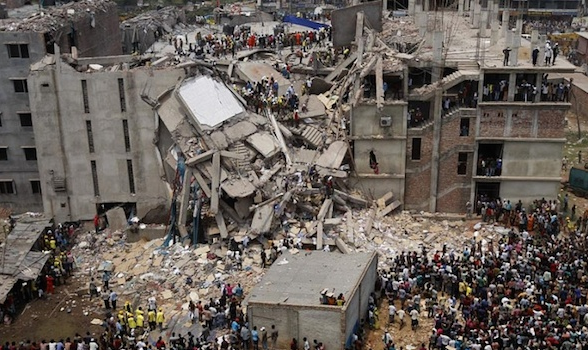
In September this year, South Africa, Nigeria, and the world watched in horror as images started trickling out showing the guest house of the Synagogue Church of All Nations crumbling down. A total of 115 (or 116 depending on your source) died in that building collapse. 84 of those people were South Africans.

It was Friday the12th September when that tragedy happened. Many of us only got to know about it the following week. It is widely reported that the leader of that church, TB Joshua, and his officials tried to play down the collapse of the building saying that only a few people had been injured, and that his own personnel were engaged in efforts, by their own means, to rescue the "injured". I say "injured" because a few days after that building collapsed, we got to learn that the building collapse was much, much worse than the public had been made to believe. Scores of people, loved by their families, had lost their lives. It is also reported, very widely, that church officials refused assistance from external agencies.

The way in which TB Joshua and his church dealt with this tragedy was distasteful, to say the least. I, a Christian, watched, read and listened in in dismay at how the church leader (TB Joshua) was responding to this tragedy. It had suddenly become all about HIM. It was an "attempted attack on HIM by a plane" that had been seen hovering above some time before the building collapsed, he claimed. Secondly, a claim was made that an explosion had been heard. That explosion also "caused" the collapse. Boko Haram (the notorious terrorist group) was also thrown into the mix.

Many of us, Christians, kept quiet, at least publicly, throughout this ordeal. Some of us chose the easier route. We directed our anger toward the Nigerian government who were perceived as stalling efforts of repatriating the mortal remains of those that had perished in that building collapse back to South Africa.

Meanwhile, serious public questions were being asked about what might have caused the collapse. Building experts, quickly rebuffed the explanation of Joshua about the aerial attack by the plane. The explosion theory was also disregarded by experts. It then emerged that at the time of the fatal collapse the building was actually in the process of being extended - additional floors were being added to the existing multi-storey building. Furthermore, it was also reported that municipal approval had not been received by the church to make these modifications to the existing building.

Many of us remained quiet.

Finally, an inquest was opened by the Nigerian authorities. The government wanted to get to the reasons why the building collapsed. In efforts to get answers from ALL stakeholders, a summons was also issued to TB Joshua to appear in court, or whatever seating that was. A second was issued, and again, TB Joshua failed to appear. His reason this time (Thursday last week) - he says he didn't receive the summons. ANOTHER summons was yet again issued for him to appear at the inquest the following day, Friday 21st November. This time his lawyers acknowledged that they had indeed receive this particular summons. BUT, they are going to challenge it. Why? "No, it is not appropriate for TB Joshua to go and give whatever testimony is required of him". Why? “No, TB Joshua is still grieving the loss of life”.

Let me park that for now.

I was raised in the church. And I truly love the church. When I was about 8 or 9, a young pastor from the Eastern Cape visited our church in Makwarela, Venda. His name was Pastor Vuyani Sam. I loved Pastor Sam. He left a lasting impression on me. Pastor Sam testified of how he gave his life to The Lord when he was just 10. When I was 9, I gave my life to The Lord. I had beaten Pastor Sam's record. Pastor Sam has since passed on.

Because my father is a pastor and church leader, we saw many, many pastors at our home. One particular pastor, whenever he meets me, still reminds me of a time when he visited our home and asked me what I wanted to be when I grew up. I confidently told him that I was going to be the chairperson of our church's District Council (DC). Why such a random ambition? My dad was, at the time, the chairperson of the Limpopo (or Northern Transvaal) District Council. I wanted to be like him. So I had ambitions of being a pastor and a church leader.

Actually, I did become a leader of sorts, much sooner than I had imagined. I held a few leadership roles when I was a teenager, often chairing committees with members older than I was. Once, my old man told me to withdraw after I had been elected Secretary, in his absence, into a district committee of a "Fathers Fraternity". I was 16 years old.

I decided to go study at Wits, in Joburg. While there, I continued to attend a branch of our church. At the same time, I was also making inroads in the leadership structures of campus ministry. So on Sundays I would go to a branch of my childhood church in the mornings and in the evenings attend services of an independent campus ministry where I would later become a leader.

After the Lagos tragedy, some friends asked me privately what my thoughts were of what had happened at that church, particularly how the church and its leader had dealt with the incident. I made my feelings known, but I chose to keep quiet from airing them publicly mainly because I felt my questioning them would be somewhat insensitive, especially because many families were still traumatized. I believe many still are.

The popular refrain among fellow Christians is that we should not question "men of God". A more popular one is “touch not the anointed of the Lord”. Fortunately, where I come from, no church leader is above reproach. And such leaders are certainly not above answering questions. Most concerning, in this case, is the absolute refusal to account to public authorities by TB Joshua. That's a very bad trend and one that must be challenged. It is doing us no favours as Christians.

I think it was Archbishop Tutu who said that "truth cannot suffer from being challenged and examined". Truth can defend itself. I wish many a church leader would embrace this.

When a leader starts displaying attributes of seeming to be above the law of the country, and acting with impunity, we should all be worried. And my Christian upbringing tells me that higher standards of leadership should be expected from any Christian leader. 

Someone asked me if I myself am a good person, when I made a statement that TB Joshua wasn't one. The truth is that I am no angel myself, to put it mildly. I failed many, many times as a leader. I made huge blunders that I am just fortunate didn't make "front pages" of Facebook. At least not yet. But if they ever do, I hope I will have the grace to own up and account to those who love me or have any interest in what I do.


www.truthmagsa.co.za